Hunter.io vs. Lusha (2026): Email Finder vs. Contact Database
Two of the most popular B2B contact tools with very different strengths. We'll break down the honest pros and cons of each—plus introduce a third option for teams selling to local businesses.
The Bottom Line
A quick summary before we dive deep.
Email finder & verifier
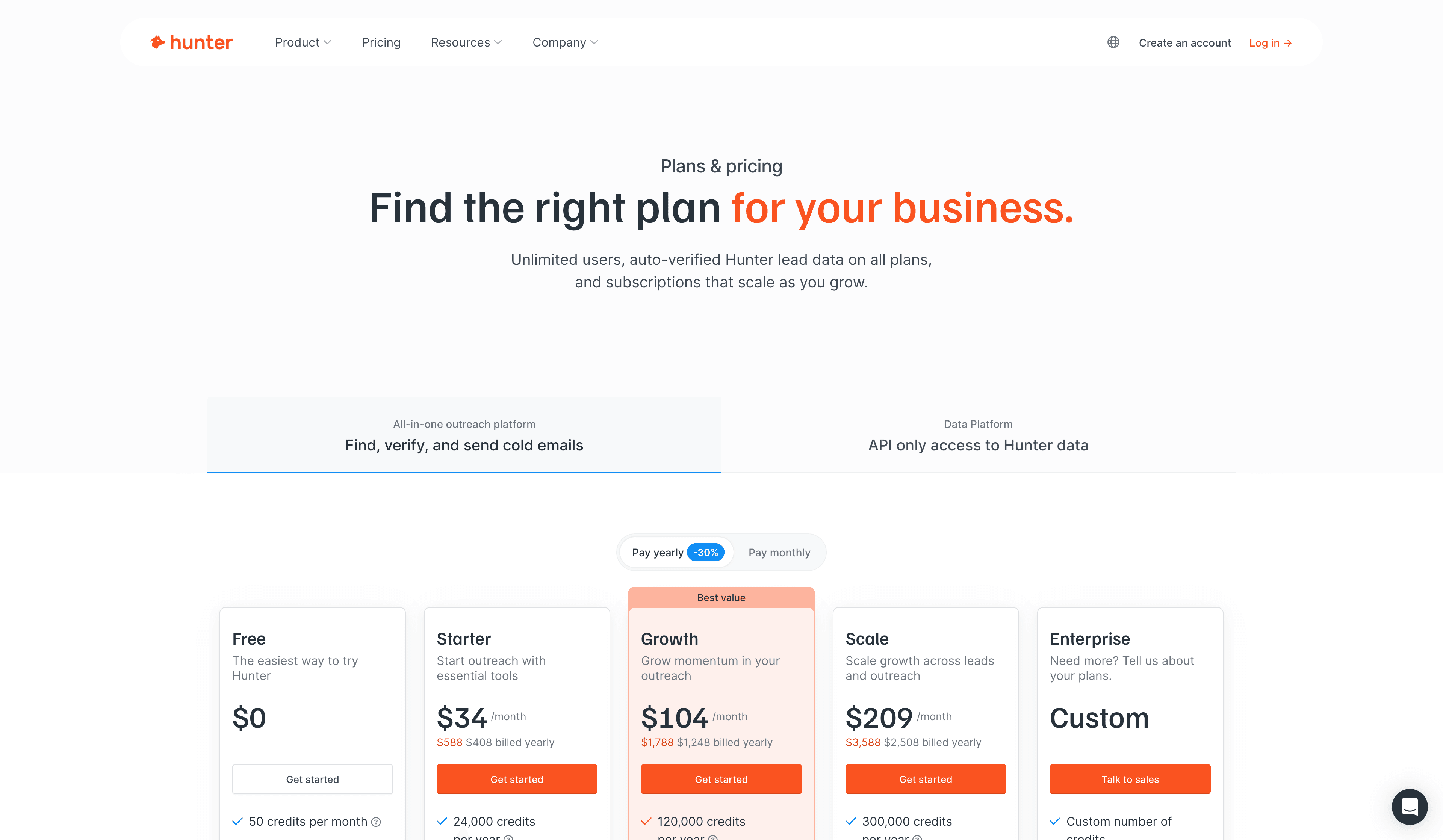
A focused tool for finding and verifying professional email addresses. Enter a domain, get every email pattern and address associated with it. Clean, simple, and affordable—starting at $34/mo (annual). Best for outbound reps who already know which companies they want to reach.
B2B contact database & intent data
A broader B2B platform with 100M+ business profiles, direct phone numbers, emails, and buyer intent signals. Works natively inside LinkedIn via Chrome extension. Starts at ~$22/user/mo (annual). Best for sales teams that need full contact profiles, not just emails.


See Both Platforms
Hunter.io vs. Lusha: Feature Breakdown
One finds emails. The other gives you full contact profiles. Here's how they compare across what matters.
Hunter is laser-focused on email. Lusha gives you the full picture including direct dials.
Hunter indexes emails across the web. Lusha maintains complete B2B contact records.
Hunter's domain search is its killer feature—type any company domain and get every associated email.
If you need phone numbers, Lusha wins outright. Hunter is email-only.
Lusha's Chrome extension works directly on LinkedIn profiles. Hunter's is more limited.
Hunter doubles as a standalone email verification tool—great for cleaning lists.
Lusha shows which companies are actively researching solutions. Hunter has no intent data.
Hunter includes a simple cold email campaign tool. Lusha requires a separate outreach platform.
Neither tool is built for local businesses. Most local SMBs don't have domains Hunter can search or LinkedIn profiles Lusha can index.
Pricing Comparison
Hunter charges per account. Lusha charges per user. Both use credit systems that can get confusing.
25 searches/mo, 50 verifications
500 searches, 1,000 verifications
2,500 searches, 5,000 verifications
10,000 searches, 20,000 verifications
Account-level pricing. *Annual billing shown. Monthly is ~30% higher. Includes cold email campaigns on all paid plans.
70 credits/mo
3,000 credits/user/yr
7,200 credits/user/yr
Unlimited contacts (fair use)
Per-user pricing. *Annual billing shown. A 5-person team on Premium = ~$262/mo. Each credit reveals one contact.
The Problem with Both
If you're selling to local businesses, neither tool solves the real problem.
Hunter's Gap
Hunter is great at finding emails—but only at companies you already know. You need to bring the domain. It can't help you discover new prospects or find local businesses you've never heard of.
- ✕No way to discover businesses—you must already have a target list.
- ✕Email-only. No phone numbers, no business context.
- ✕Local businesses often don't have company domains to search.
Lusha's Gap
Lusha gives you great contact data—for people on LinkedIn. But most local business owners aren't active on LinkedIn. And Lusha has no way to search by geography or business type.
- ✕LinkedIn-dependent. Your plumber isn't on LinkedIn.
- ✕Per-user pricing gets expensive fast for teams.
- ✕No local business discovery—you search people, not businesses.
The shared blind spot: Both Hunter and Lusha assume you already know which companies to target. Neither helps you discover local businesses in the first place. That's the step they both skip.

What if you could discover leads—not just enrich them?
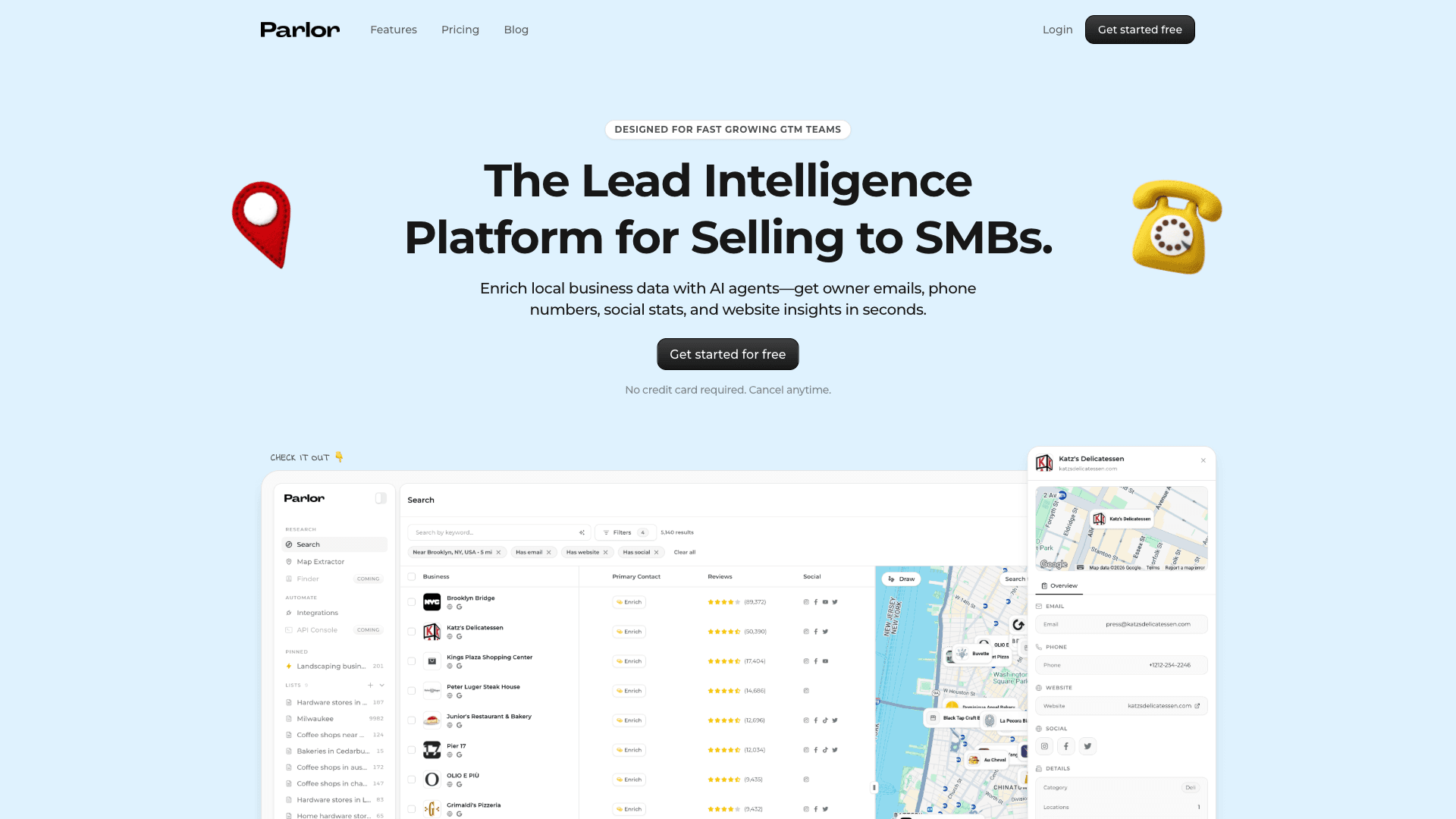
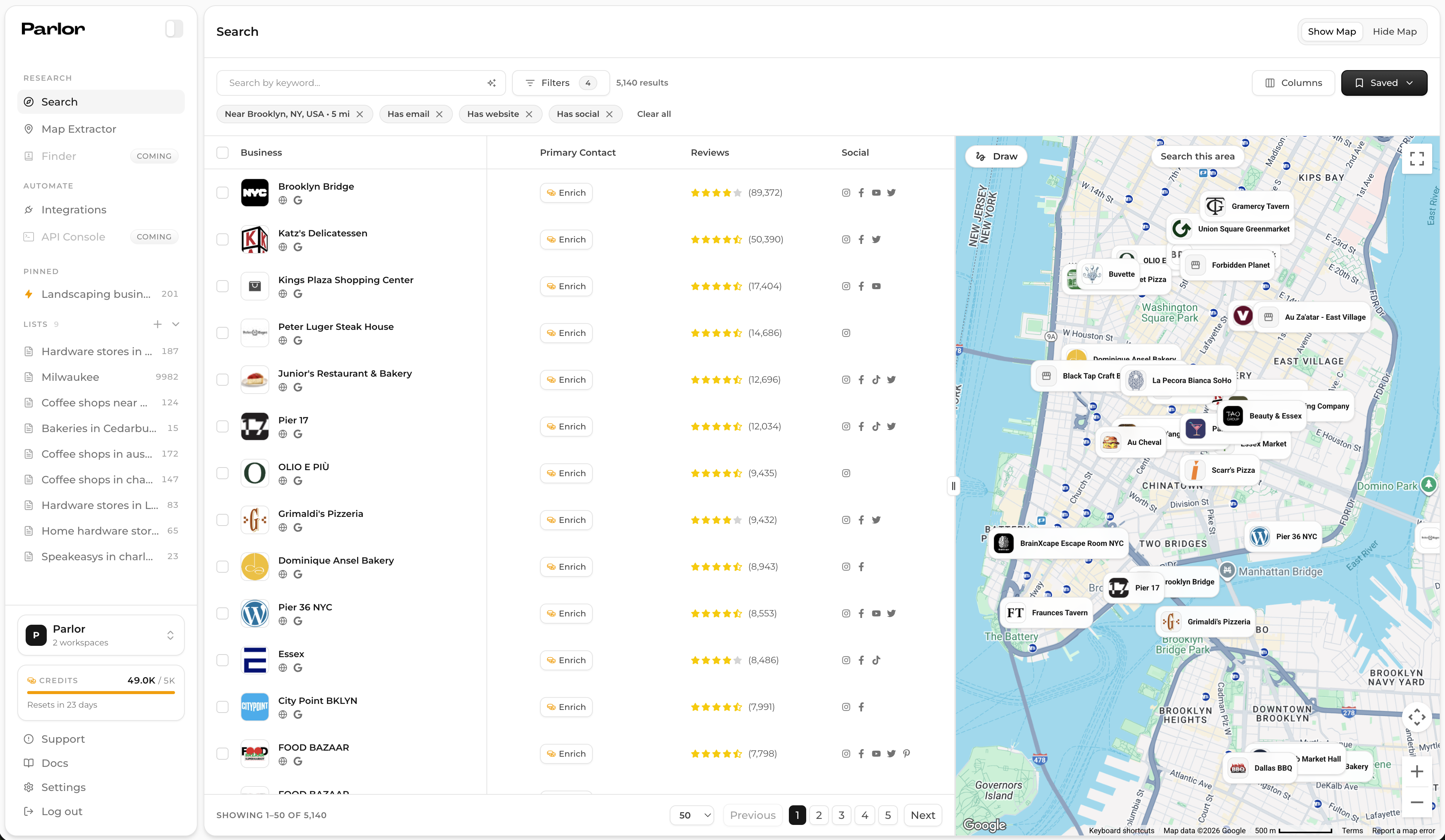
Hunter finds emails at companies you know. Lusha finds contacts on LinkedIn. LocalStitch finds the businesses themselves—straight from Google Maps—then enriches them with verified contacts automatically.
- Search by industry + location on Google Maps
- AI agents research each business automatically
- Waterfall enrichment for verified emails & phones
- Starting at $49/mo—no per-user or per-credit fees
Pick the Right Tool
Each tool has a sweet spot. Here's who should use what.
Choose Hunter.io if you...
- Already have a list of companies to target
- Only need email addresses, not phone numbers
- Want built-in email verification and campaigns
- Need a simple, affordable tool (not an enterprise platform)
Choose Lusha if you...
- Need phone numbers alongside emails
- Prospect heavily on LinkedIn
- Want buyer intent data to prioritize outreach
- Sell to mid-market and enterprise companies
Choose LocalStitch if you...
- Sell to local businesses (not enterprises)
- Need to discover leads, not just enrich existing lists
- Want AI to research each business before you reach out
- Prefer flat pricing—no per-user or per-credit fees
The Bottom Line
Hunter.io and Lusha are both solid tools for what they do. Hunter is the best in the business at finding and verifying professional email addresses—simple, clean, and affordable. Lusha is a more complete contact database with phone numbers, LinkedIn integration, and intent data that's hard to beat for B2B prospecting.
But if you sell to local businesses, both tools have the same blind spot. They enrich contacts at companies you already know about. Neither one helps you discover new prospects. Joe's Plumbing doesn't have a company domain for Hunter to search, and the owner isn't on LinkedIn for Lusha to index.
LocalStitch was built for that gap. It starts with Google Maps—search "HVAC companies in Dallas" and get a full list of real local businesses, enriched with verified contacts and AI-powered research. No domains needed, no LinkedIn profiles required. Just the businesses that are actually operating in your target market.

Ready to Try a Better Approach?
If you're selling to local businesses, LocalStitch was built for you. Plans starting at $49/month.